Burgundy Interiors: The Rich Colour Bringing Warmth Back Into Our Homes
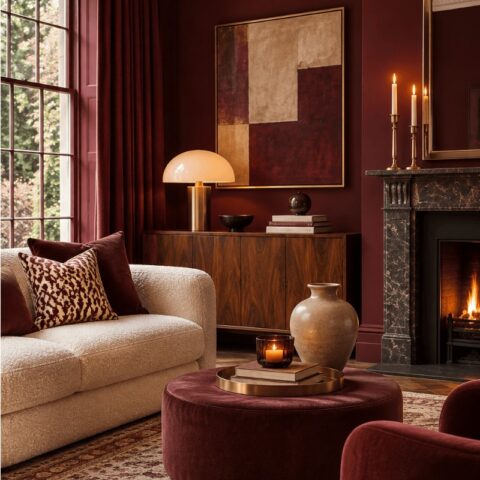
From deep wine-red walls to luxurious velvet upholstery, burgundy is bringing richness, warmth and a little drama to contemporary interiors. Here’s why this sophisticated shade deserves a place in our homes.
For years, neutral interiors have been defined by soft beige, warm white and understated shades of grey. While these colours remain timeless, there’s something particularly appealing about the return of richer, more expressive tones.
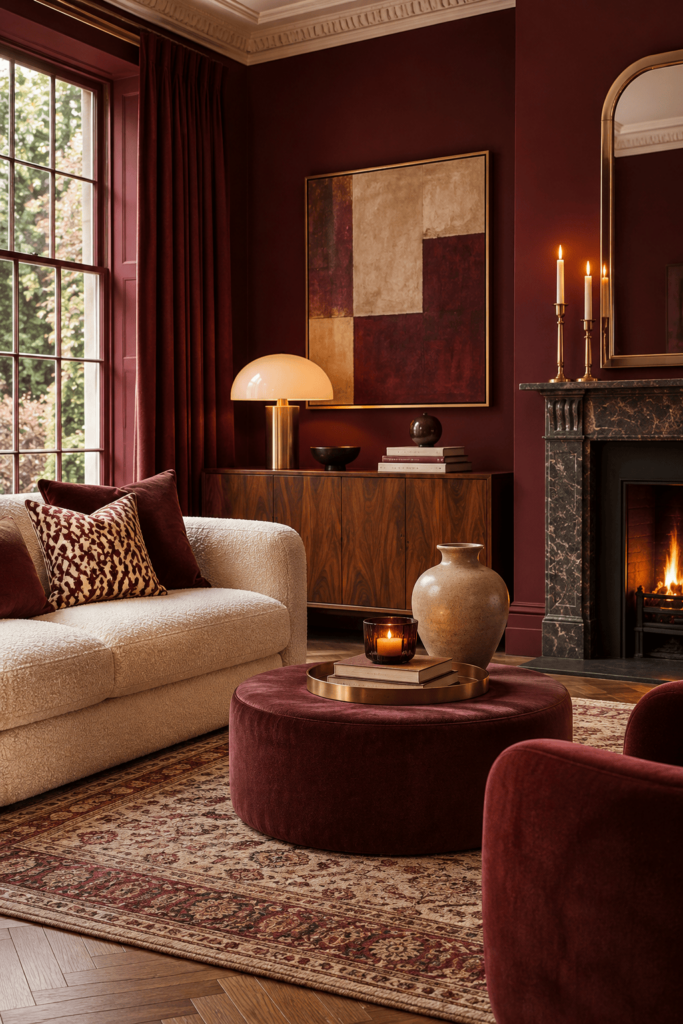
Burgundy is one of those colours that can completely change the atmosphere of a room. Deep, enveloping and surprisingly versatile, it brings a sense of warmth and sophistication that lighter shades sometimes struggle to achieve.
From wine-coloured velvet sofas to oxblood cabinetry and beautifully painted walls, burgundy offers a way to introduce colour without sacrificing elegance.
And perhaps its greatest strength is that it can feel both traditional and thoroughly modern.
Why Burgundy Is Capturing Our Attention
Burgundy sits somewhere between red, brown and purple, giving it a depth that makes it particularly interesting in interiors.
Unlike brighter reds, which can feel energetic or overwhelming, burgundy has a more restrained quality. It introduces colour while maintaining a sense of comfort and intimacy.
Its appeal also fits naturally with the renewed interest in vintage furniture, darker wood finishes and interiors that feel layered rather than perfectly coordinated.
A burgundy velvet armchair beside a walnut bookcase, for example, creates a completely different atmosphere from the same furniture upholstered in pale grey.
The effect is richer, warmer and often more personal.
How to Bring Burgundy Into Your Home
The beauty of burgundy is that it works at almost any scale. It can be the defining colour of an entire room or a carefully chosen accent that brings an otherwise neutral scheme to life.
1. Make a Statement With Burgundy Walls
For a dramatic approach, consider using burgundy on the walls.
In a living room or bedroom, deep wine-red paint creates a cocooning effect, particularly when paired with soft lighting and tactile fabrics.
Rather than treating burgundy as a feature-wall colour, painting the entire room can create a more cohesive result.
Warm white ceilings, natural linen curtains and lighter upholstery provide contrast, preventing the scheme from feeling too heavy.
For something more contemporary, burgundy walls can also look beautiful alongside pale oak furniture and simple architectural detailing.
2. Introduce Burgundy Through Furniture
If painting an entire room feels like too much of a commitment, furniture offers a more flexible approach.
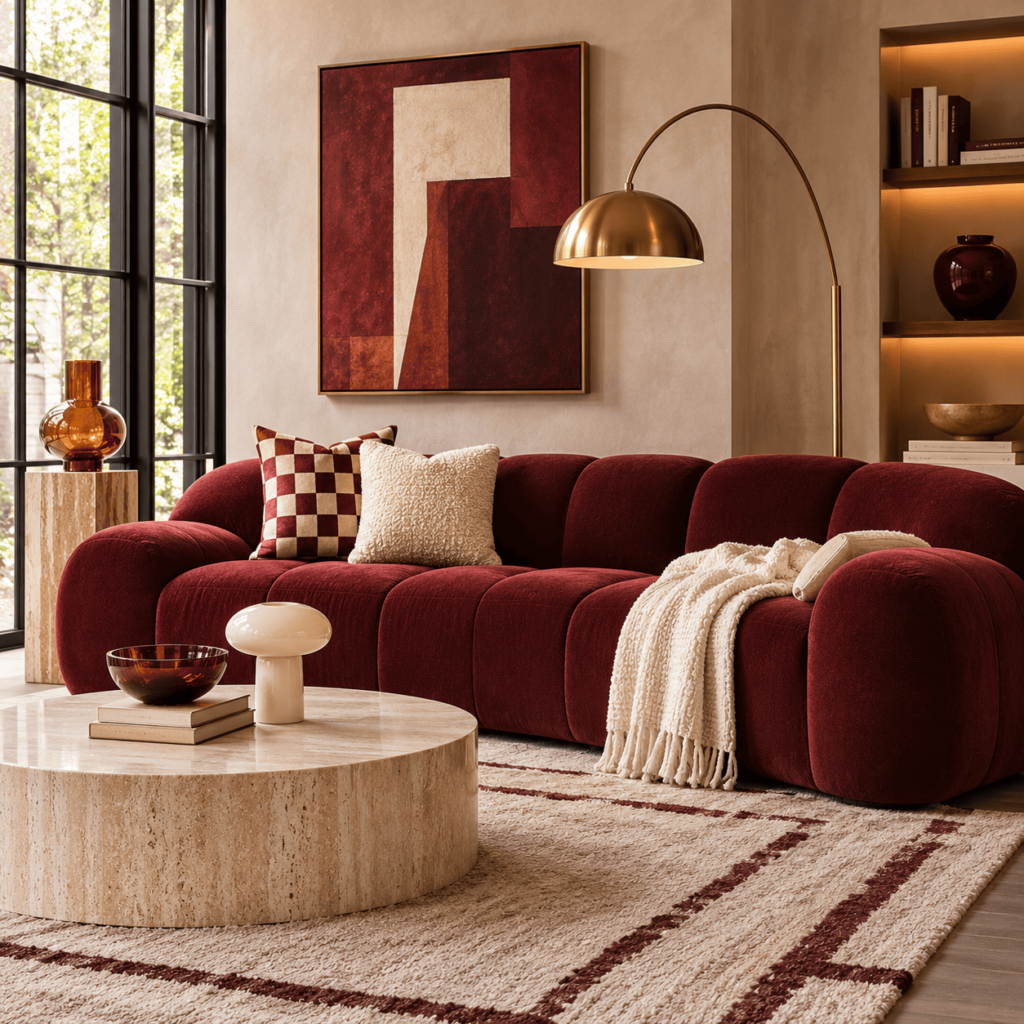
A burgundy velvet sofa can become the focal point of a neutral living room, while an oxblood leather armchair introduces a more traditional, collected quality.
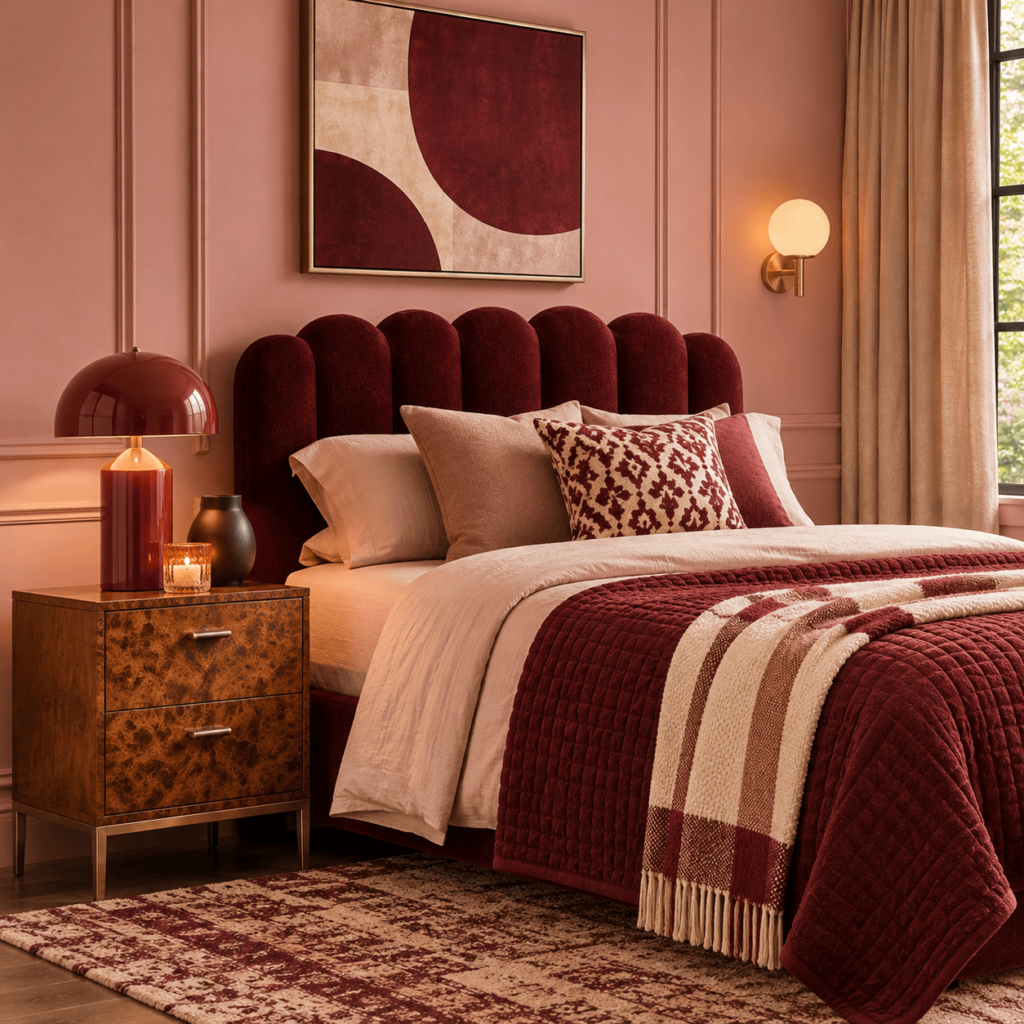
In bedrooms, an upholstered burgundy headboard adds warmth and sophistication without requiring a complete redesign.
The key is to let the colour have enough space to make an impression. One substantial piece often works better than several smaller accessories competing for attention.
3. Experiment With Smaller Decorative Details
Burgundy doesn’t have to dominate a room to make a difference.
A pair of wine-coloured cushions, a patterned rug or a ceramic table lamp can introduce just enough depth to transform a lighter interior.
For a more considered scheme, repeat the colour subtly through different materials rather than using identical shades everywhere.
A burgundy cushion might sit alongside a faded red pattern in a rug, while a darker oxblood vase introduces another variation.
These small differences create a room that feels layered and naturally put together.
The Colours and Materials That Work Beautifully With Burgundy
One of burgundy’s greatest advantages is how comfortably it sits alongside other colours.
Burgundy and cream create a soft, elegant combination, particularly when paired with natural linen, wool and warm lighting.
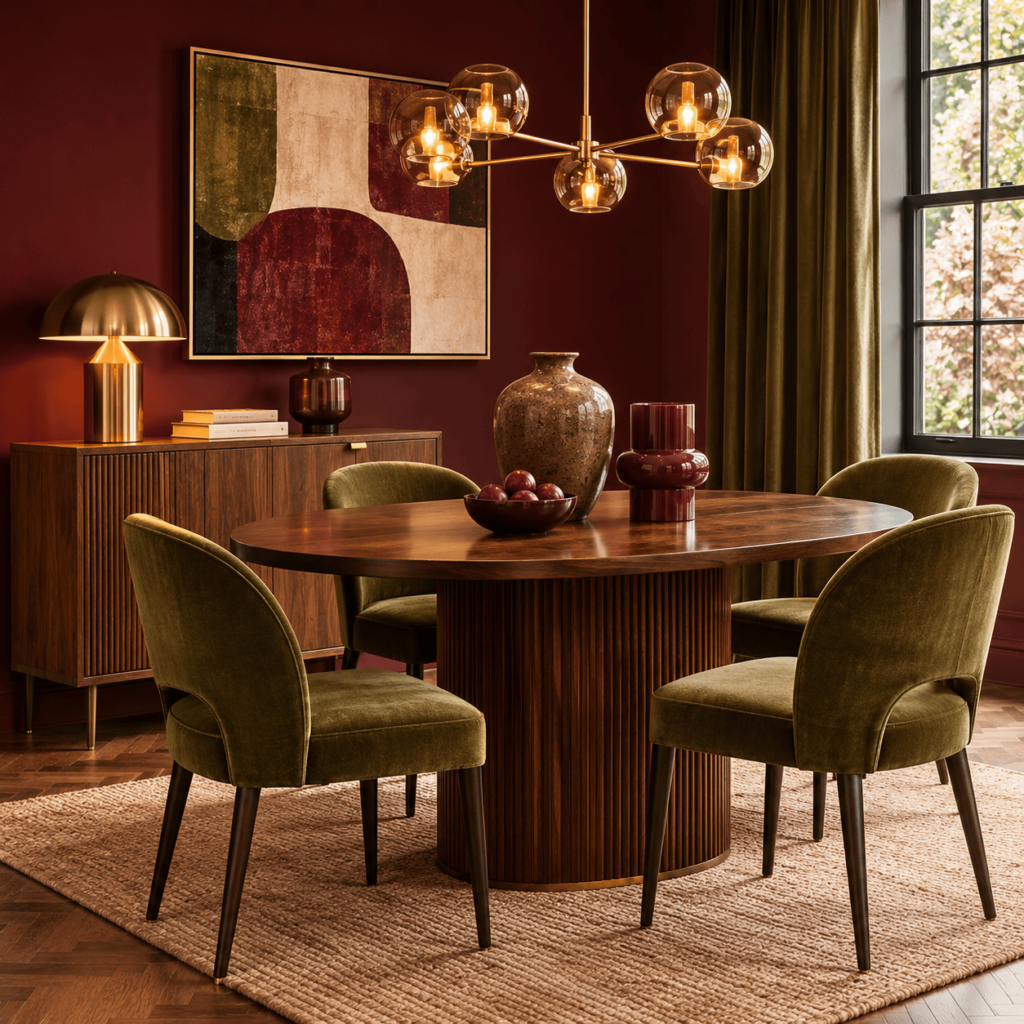
Burgundy and olive green offer something moodier and more expressive. The earthy quality of green balances the richness of red, making the pairing especially appealing in traditional and vintage-inspired interiors.
Burgundy and pale pink provide an unexpected contrast. Muted blush and dusty rose can soften the depth of burgundy without making the scheme feel overly feminine.
For a more dramatic look, burgundy and dark walnut create a sophisticated combination, especially when complemented by antique brass, marble and textured upholstery.
Material choices matter just as much as colour. Velvet, leather, stained timber and natural stone all enhance burgundy’s richness, while lighter fabrics prevent the room from becoming visually overwhelming.
A Colour With Lasting Appeal
Although burgundy is attracting renewed attention, it isn’t a colour that belongs exclusively to one decorating movement.
It has appeared in traditional interiors for generations, and its ability to work alongside both antique and contemporary furniture gives it lasting versatility.
The most successful burgundy interiors don’t necessarily follow a trend. They use colour thoughtfully, creating spaces that feel warm, comfortable and individual.
Whether you choose a dramatic painted room, a beautiful piece of furniture or just a few carefully selected accessories, burgundy offers something increasingly valuable in interior design: a sense of character.
And sometimes, that’s exactly what a room needs.
Enjoying Houszed?
Love our interiors and decorating inspiration? Help us keep sharing fresh ideas by buying us a coffee.
☕ Support HouszedCompletely optional. Always appreciated.
