How to Arrange Furniture in a Long, Narrow Living Room
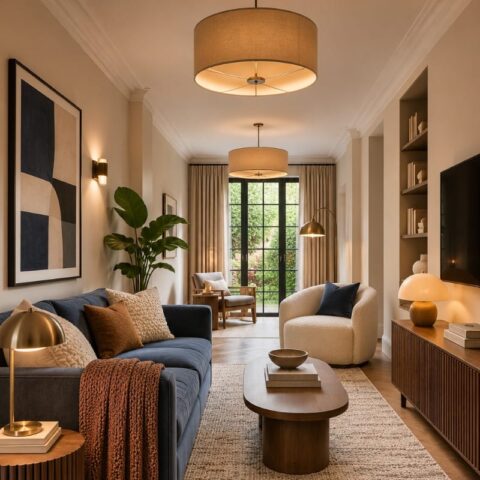
A long, narrow living room can be one of the more frustrating spaces to furnish. There’s often plenty of floor area on paper, yet somehow never quite enough room to arrange the furniture comfortably.
The sofa feels too large against one wall, the coffee table interrupts the walkway, and every attempt to create a cosy seating area seems to emphasise the room’s unusual proportions.
It’s tempting to treat the space like a conventional rectangular living room, just with everything pushed a little closer together. Unfortunately, that’s often where the problems begin.
The secret to furnishing a long, narrow living room isn’t necessarily finding smaller furniture. It’s understanding how to work with the room’s proportions rather than against them.
With thoughtful placement, carefully chosen pieces and a little attention to visual balance, even a challenging layout can become an elegant and comfortable living space.

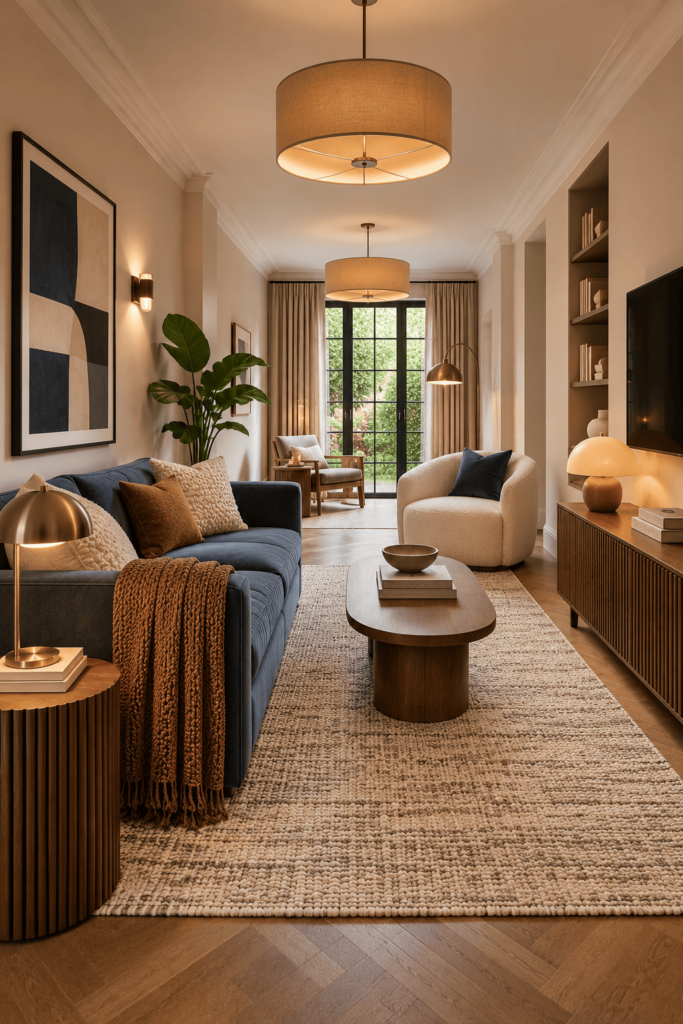
1. Stop Arranging Everything Along the Longest Walls
One of the most common mistakes in a narrow living room is positioning all the furniture against the two longest walls.
A sofa sits along one side, the television occupies the opposite wall, and perhaps a console table or occasional chair fills whatever space remains.
While this arrangement might seem logical, it can make the room feel like a passageway.
The long, uninterrupted sightline exaggerates the narrow proportions, while the furniture creates two opposing lines that draw attention to the shape of the space.
The Design Fix
Rather than automatically following the walls, look for opportunities to interrupt those long horizontal lines.
An armchair positioned at a slight angle, a circular coffee table or a sofa placed across part of the room can help break up the corridor effect.
Where space allows, arranging seating around a central focal point can create a more intimate atmosphere.
You don’t need to abandon the walls entirely. In particularly narrow rooms, keeping the principal sofa against one wall may still be the most practical solution.
The objective is simply to avoid making every piece of furniture reinforce the room’s length.
2. Create a Defined Seating Area
Long living rooms often struggle with a lack of visual structure.
Furniture can feel scattered along the length of the space, with little connection between individual pieces.
This is particularly noticeable when the sofa sits at one end, an armchair occupies the other, and a coffee table is positioned somewhere in between.
The room may contain everything it needs, but it doesn’t necessarily feel like a cohesive living area.
The Design Fix
Start by establishing a clear seating zone.
Position the sofa and occasional chairs so they feel connected rather than spread across the entire room.
A well-proportioned rug can help define this arrangement, creating a visual boundary without introducing physical barriers.
Where possible, allow the front legs of the main seating pieces to sit on the rug. This helps bring the individual furniture elements together.
In a longer room, you may find that concentrating the main seating towards one end creates a more comfortable arrangement than attempting to use every available inch.
The remaining space can then serve another purpose or simply provide breathing room.
A successful layout doesn’t have to occupy the entire floor. It needs to make the room feel balanced and comfortable.
3. Choose a Sofa That Works with the Room’s Proportions
The sofa is usually the largest piece of furniture in a living room, which makes its proportions especially important in a narrow space.
A deep, generously upholstered sofa might look beautiful in a showroom but dominate a room where every centimetre of circulation space matters.
Equally, choosing a very small sofa simply because the room is narrow can create a disconnected seating arrangement.
The Design Fix
Pay particular attention to sofa depth, not just width.
A sofa with a slightly shallower seat and a relatively slim frame can offer comfortable seating without projecting unnecessarily far into the room.
Styles with narrower arms may also provide more usable seating within the same overall dimensions.
In some narrow living rooms, a compact corner sofa can work surprisingly well, especially when positioned towards one end of the space.
However, sectionals aren’t automatically the best solution. Their projecting sections can interrupt circulation, particularly in rooms with several doorways.
Before committing to a new sofa, mark out its dimensions on the floor with masking tape.
Include the depth of the coffee table and the space needed to walk comfortably around the furniture.
It’s a simple exercise that can prevent an expensive mistake.
4. Think Carefully About Where the Television Goes
Television placement can be particularly difficult in a long, narrow living room.
If the screen sits on one of the shorter walls, the sofa may end up positioned too far away.
Place it on a long wall, and the seating arrangement can feel compressed, with little space between the sofa and screen.
Add a fireplace, large window or multiple doorways, and the problem becomes even more complicated.
The Design Fix
Consider the viewing distance, seating angle and circulation routes together rather than treating television placement as a separate decision.
In some rooms, positioning the television on a longer wall opposite a relatively shallow sofa creates the most practical arrangement.
In others, placing it at one end of the room allows the main seating area to remain concentrated around it.
A wall-mounted television may help reduce the visual weight of a large media unit, although it won’t resolve an unsuitable viewing distance or an awkward seating position.
Where a fireplace and television compete for attention, consider whether they really need to share the same focal wall.
The most successful arrangement is the one that supports comfortable viewing without allowing the television to dictate every other aspect of the room.
5. Break a Very Long Room into Two Distinct Zones
If your living room is particularly long, trying to create one continuous seating arrangement can actually make the space more difficult to furnish.
The furniture becomes spread out, the proportions feel exaggerated, and the room loses a sense of intimacy.
This is where dividing the space into smaller functional areas can work beautifully.
The Design Fix
Think of the room as two connected spaces rather than one unusually long rectangle.
The main seating area might occupy one end, while the remaining section becomes a reading corner, compact home office or occasional seating area.
A sofa placed perpendicular to a wall can sometimes help establish this separation, provided there’s sufficient space to move around it.
Alternatively, a slender console table behind the sofa can create a subtle division without making the room feel enclosed.
Lighting can reinforce the distinction between zones.
A floor lamp and comfortable chair might establish a quiet reading area, while table lamps and a central rug help define the main seating arrangement.
Try to maintain some visual continuity through colour, materials or furniture finishes so that the two areas feel connected.
The aim is to give the room structure, not to divide it into two cramped spaces.
6. Use Furniture Shapes to Soften the Room
When every major piece of furniture is rectangular, a narrow living room can start to feel rather rigid.
A long sofa, rectangular coffee table, television cabinet and console table all reinforce the same straight lines.
This can make the room feel more elongated than it actually is.
The Design Fix
Introduce some variation in furniture shapes.
A round or oval coffee table can soften a tightly arranged seating area while removing sharp corners from the main circulation space.
Curved occasional chairs can also help create a more relaxed arrangement, particularly when positioned at an angle to the sofa.
A circular side table may be easier to accommodate beside an armchair than a bulky rectangular alternative.
However, curved furniture isn’t always more space-efficient. A large circular table can occupy more usable floor area than a carefully proportioned narrow table.
Choose shapes according to the available space rather than simply following a decorating trend.
The objective is to create visual variety without compromising comfort.
7. Protect the Natural Walkway
One of the most important considerations in any narrow living room is how people move through it.
Unlike a square room, where circulation can often happen around several sides of the furniture, a narrow room may have only one practical route between entrances.
If the main seating arrangement interrupts that route, the space can feel awkward regardless of how attractive the furniture looks.
The Design Fix
Identify the natural walkway before deciding where the furniture belongs.
Consider how people move from the entrance to the seating area, towards windows, and between any adjoining rooms.
As a useful starting point, aim for approximately 75 to 90 cm of unobstructed width along main circulation routes where possible.
Some homes will need to work with less, particularly in older properties with unusually narrow proportions.
Try to keep the primary route to one side of the main seating area rather than directing people through the middle of it.
A narrow console, wall-mounted lighting or smaller side table might help preserve valuable floor space.
Sometimes, removing one unnecessary piece of furniture makes a greater difference than rearranging everything else.
8. Don’t Automatically Choose a Long, Narrow Rug
It might seem sensible to choose a rug that mirrors the proportions of a narrow living room.
However, an elongated runner-style rug beneath a similarly long furniture arrangement can emphasise the corridor effect.
The rug ends up drawing the eye from one end of the room to the other rather than helping establish a comfortable seating area.
The Design Fix
Choose a rug based on the furniture grouping, not simply the shape of the room.
A generously proportioned rectangular rug can help anchor a sofa and armchairs, provided it doesn’t obstruct doors or extend awkwardly into circulation routes.
In some rooms, a nearly square rug may create a stronger sense of balance.
Avoid choosing a rug so small that it sits isolated beneath the coffee table.
Ideally, the principal seating pieces should have a clear visual relationship with it.
If the room contains two distinct zones, separate rugs can help reinforce their individual purposes.
The important thing is that the rugs define useful areas rather than simply following the walls.
9. Use Lighting to Reduce the Corridor Effect
Long living rooms can suffer from uneven lighting, particularly when natural light enters from windows at only one end.
One section may feel bright and welcoming while the opposite end appears gloomy.
A single central ceiling light can make this imbalance more noticeable, leaving the far corners poorly illuminated.
The Design Fix
Distribute lighting throughout the room rather than relying on one overhead source.
Table lamps, floor lamps and discreet wall lights can establish several comfortable pools of light along the room’s length.
In a living room divided into separate zones, consider giving each area its own lighting arrangement.
A reading chair might benefit from a directional lamp, while softer ambient lighting may be more appropriate beside the sofa.
Using similar colour temperatures throughout the space helps maintain a cohesive atmosphere.
Thoughtful lighting won’t physically change the proportions of the room, but it can make the space feel more inviting and visually balanced.
10. Leave Some Space Unoccupied
Perhaps the most overlooked principle in furnishing a narrow living room is knowing when to stop.
Because the room is long, there can be a temptation to place something along every available stretch of wall.
Another console table, an extra chair, a storage unit or a collection of decorative objects might seem harmless individually.
Together, they can make an already challenging space feel cluttered.
The Design Fix
Be selective about what genuinely contributes to the room.
If a piece of furniture doesn’t improve comfort, storage or functionality, consider whether it’s necessary.
Leaving part of a wall clear can create a welcome visual pause.
Similarly, allowing space around a beautiful armchair or sideboard can give that piece greater presence.
A narrow living room doesn’t necessarily need less personality. It simply benefits from a more considered approach to how that personality is expressed.
Before You Rearrange Your Furniture
Before making any major changes, sketch a simple floor plan of your living room.
It doesn’t need to be professionally drawn.
Measure the room’s length and width, mark the positions of doors, windows, radiators and fireplaces, and record the dimensions of your largest furniture pieces.
Then experiment with a few different arrangements on paper.
Pay particular attention to the relationship between the sofa, television, coffee table and natural walkway.
You may find that moving the sofa to a different wall, changing the position of an armchair or removing a bulky table is enough to make the room feel significantly more comfortable.
It’s far easier to test these ideas on paper than to repeatedly move heavy furniture around the room.
The Final Word
A long, narrow living room doesn’t have to feel like an awkward compromise.
In fact, its unusual proportions can create opportunities for beautifully defined seating areas, intimate reading corners and furniture arrangements that feel more considered than those in a conventional square room.
The key is to resist the temptation to simply line everything up along the walls.
Think about how the room is used, establish clear furniture groupings and protect the space needed for comfortable movement.
Choose furniture that complements the proportions rather than overwhelms them, and don’t be afraid to leave some areas relatively open.
Ultimately, the best layout isn’t the one that makes your living room look wider in a photograph.
It’s the one that makes the space feel comfortable, balanced and genuinely enjoyable to live in.
Enjoying Houszed?
Love our interiors and decorating inspiration? Help us keep sharing fresh ideas by buying us a coffee.
☕ Support HouszedCompletely optional. Always appreciated.
