The Rise of Sculptural Furniture: When Everyday Pieces Become Art
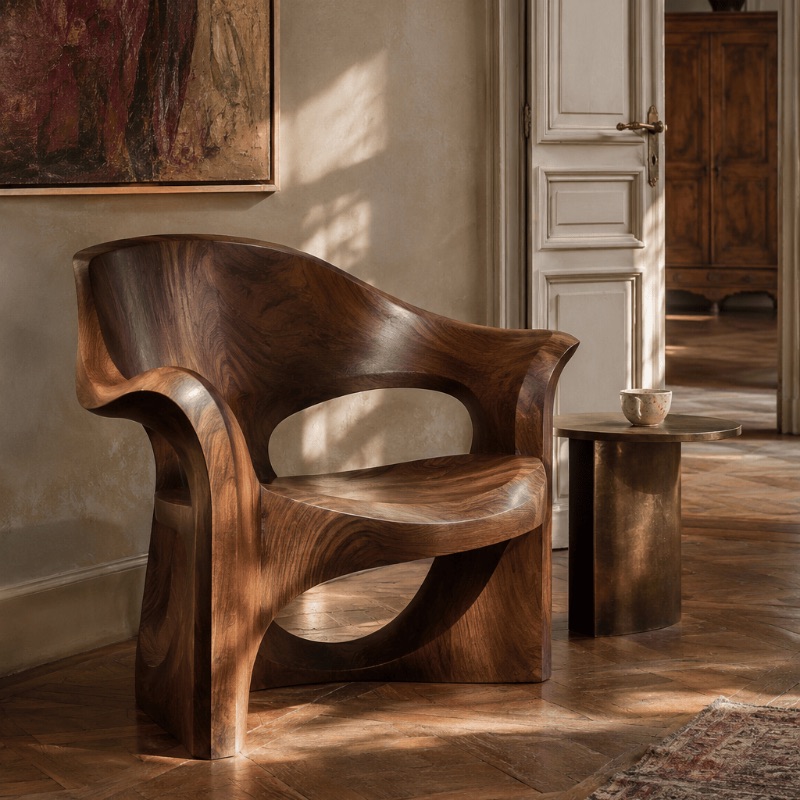

For centuries, furniture has occupied an uncertain position between craftsmanship, artistic expression and domestic necessity. As contemporary designers explore the expressive possibilities of everyday objects, it is worth reconsidering why we have been so determined to keep art and usefulness apart.
The peculiar business of sitting on art
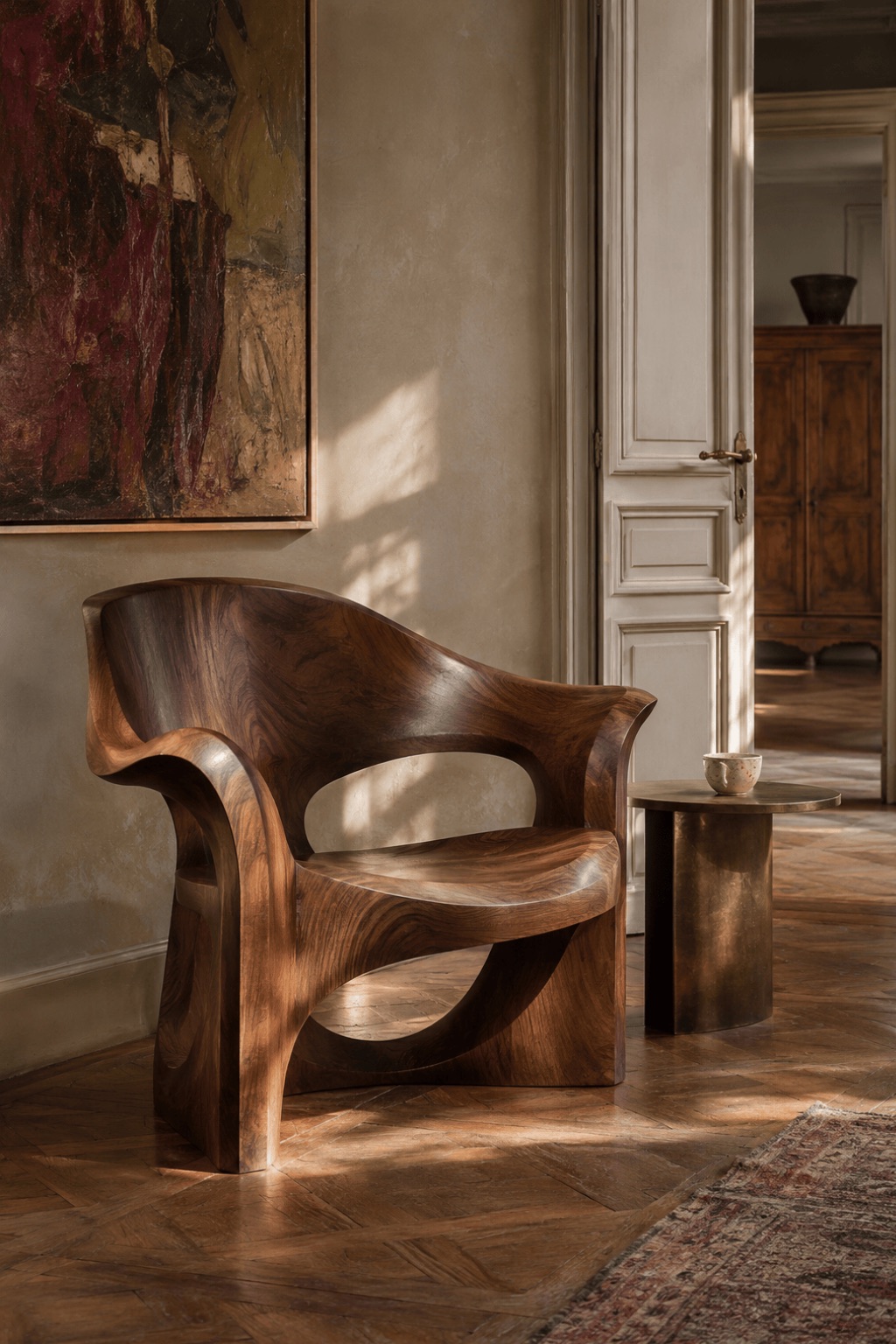
Put a beautifully carved wooden chair in a gallery and visitors will walk around it, contemplating its proportions, examining its surfaces and discussing the intentions of its maker. Put the same chair in a living room and someone will inevitably ask whether it is comfortable.
The object has not changed. Our expectations of it have.
Few categories of design expose the peculiar distinctions we make between art and usefulness quite as effectively as furniture. We admire a sculptor for transforming a block of timber into an expressive form, yet expect a furniture maker working with the same material to justify every creative decision through practicality.
Why should the presence of a function diminish the artistic significance of an object?
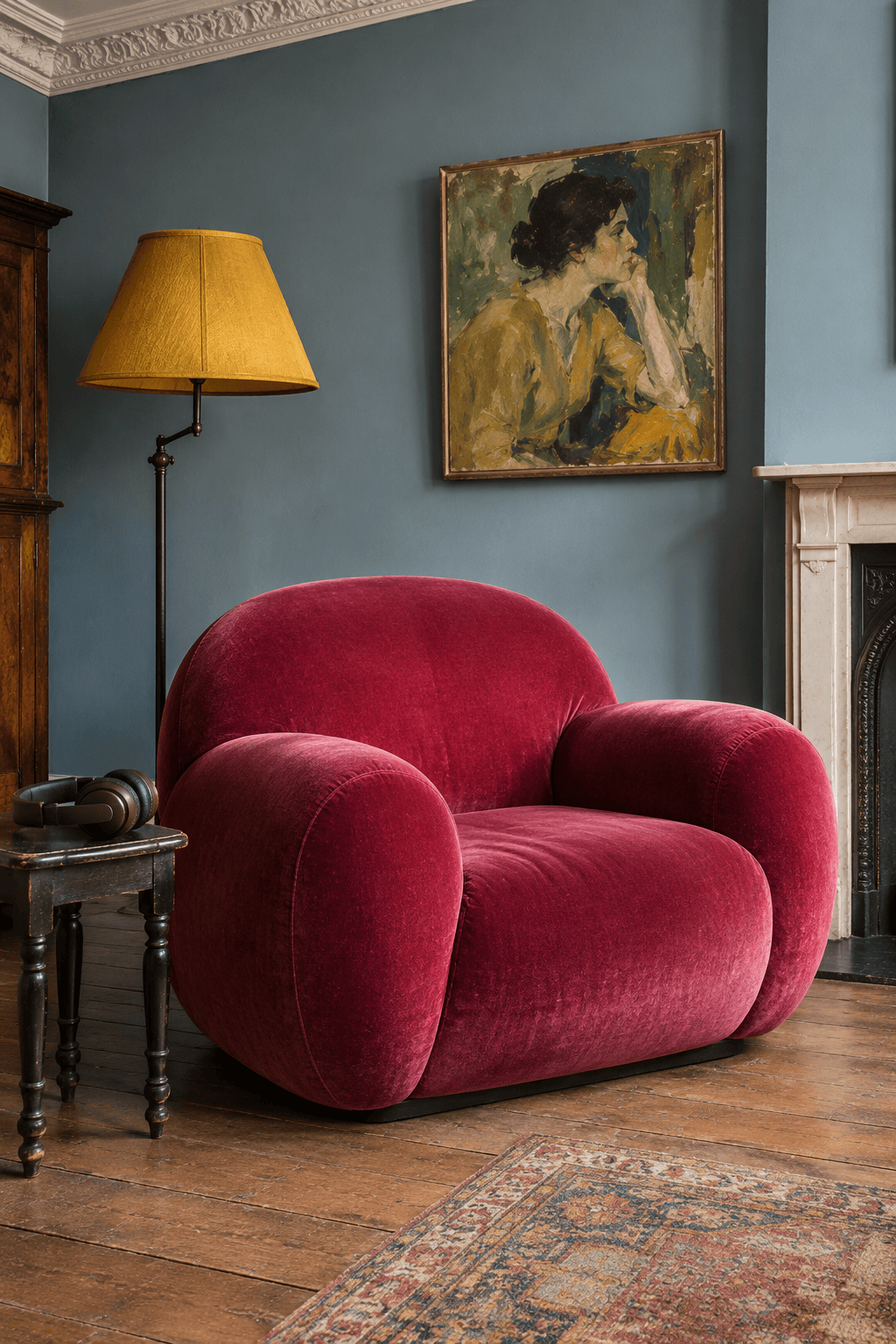
Contemporary sculptural furniture challenges this distinction with considerable imagination. Chairs acquire the presence of figurative sculpture. Tables become architectural compositions in miniature. Upholstered seats develop wonderfully improbable silhouettes that bring a little humour into otherwise serious interiors.
What makes these objects interesting is not simply their appearance. They ask us to reconsider the familiar.
And familiarity, as anyone who has spent years living in the same house will appreciate, can make us surprisingly inattentive to the things around us.
A history older than modern design
The conventional history of sculptural furniture tends to begin somewhere in the twentieth century, with a handful of celebrated designers challenging the established principles of modern furniture construction.
It is an attractive narrative, although a rather incomplete one.
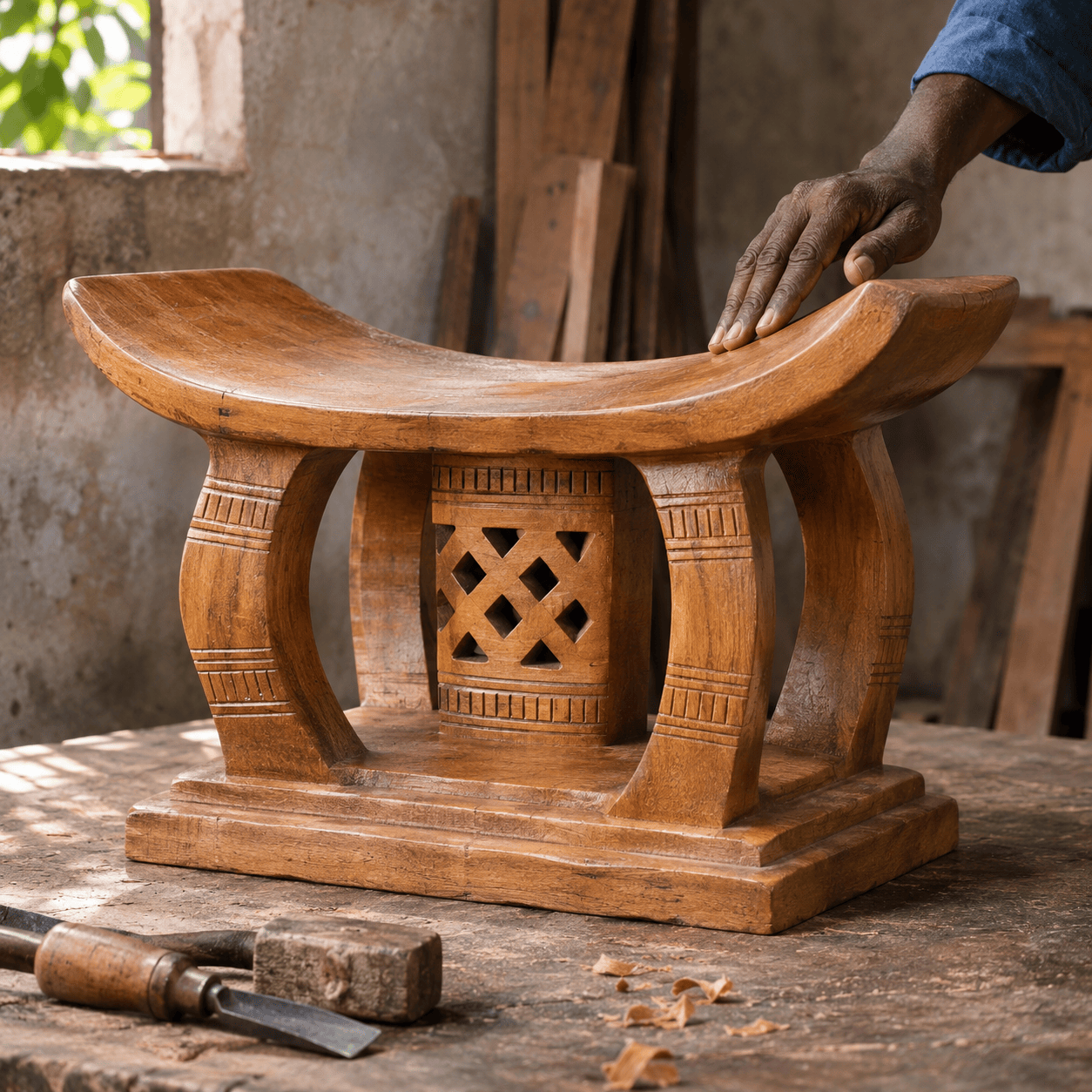
Consider the traditional prestige stools of the Akan peoples of Ghana. Carved from individual pieces of timber, these objects combine curved seating surfaces with intricate supporting structures, geometric decoration and culturally significant forms.
Certain examples were associated with leadership and social standing. Their meaning extended well beyond the physical act of sitting.
To interpret such an object exclusively through its sculptural qualities would be to overlook much of its significance. Equally, to describe it simply as furniture would tell us very little about the society that produced it.
The distinction between a useful object and a meaningful one was never particularly helpful in this context.
European design institutions have historically organised objects into categories such as fine art, decorative art, furniture and ethnography. These classifications can help us understand collections, but they can also influence which objects receive artistic recognition and which makers remain anonymous.
The contemporary enthusiasm for sculptural furniture offers an opportunity to reconsider some of those inherited distinctions.
We might discover that the supposedly modern idea of furniture possessing artistic and cultural significance is considerably older than we imagine.
Three designers who changed the conversation
Isamu Noguchi approached furniture with the understanding of someone who had already devoted much of his creative life to sculpture.
His celebrated glass-topped coffee table, introduced commercially by Herman Miller in the late 1940s, remains one of the most elegant demonstrations of how little material is required to establish a memorable form.
Two shaped timber elements interlock beneath a transparent surface. Walk around the table and the wooden composition appears to shift. The glass allows the eye to travel through the object rather than stopping at its upper surface.
The table is beautiful precisely because its structure is visible. Concealing it would destroy much of its character.
Wendell Castle approached the problem quite differently.
During the early 1960s, the American furniture artist experimented with stack lamination, building up substantial wooden forms from layers of timber before carving them into expressive shapes.
The technique gave him a freedom unavailable through many conventional approaches to cabinetmaking. A supporting structure could flow into a seat or backrest without the obvious divisions associated with traditional furniture construction.
His work could be playful, monumental and occasionally disconcerting. Some pieces seemed to belong as much to the world of sculpture as to the domestic interior.
Then there was Verner Panton.
The development of his celebrated cantilevered chair, presented in 1967, demonstrated how industrial plastics could introduce an entirely different vocabulary of form. Its unmistakable silhouette swept continuously from the backrest towards the floor, dispensing with the familiar arrangement of four individual legs.
Noguchi, Castle and Panton did not arrive at a shared visual style. Their work remains interesting because each discovered possibilities within a particular material and method of production.
The expressive furniture that followed owes a considerable debt to that curiosity.
The gallery comes into the living room
Walk through the world of contemporary collectible design and the old classifications begin to look increasingly inadequate.
At Design Miami Paris in 2026, the award for Best Contemporary Work went to Mathias Bengtsson’s Membrane Chair, presented by Galerie Maria Wettergren. The fair also recognised a monumental installation by French cabinetmaker and designer Pierre Renart.
Furniture, craftsmanship, sculpture and architectural installation occupied the same cultural territory.
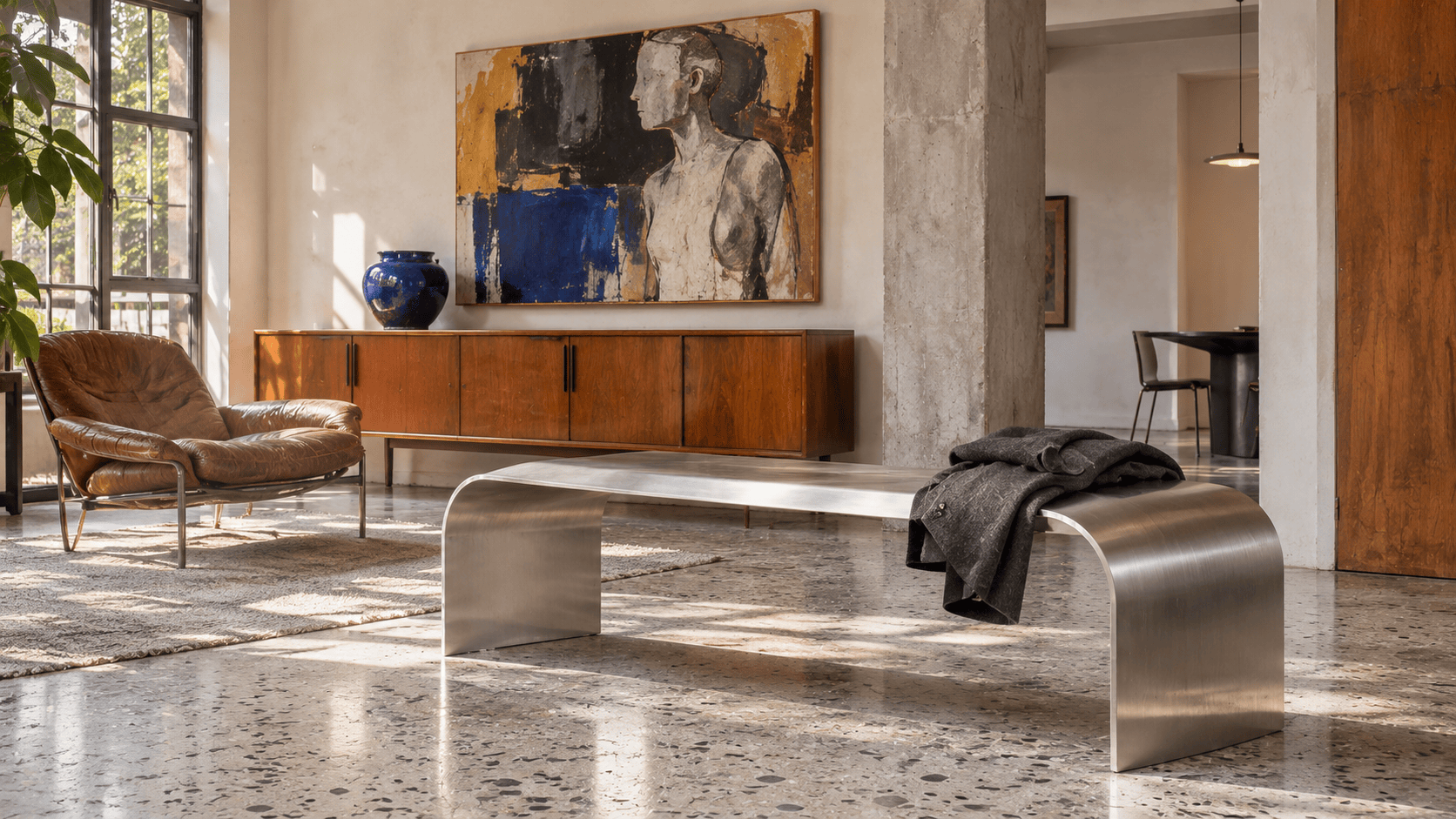
The visibility of such work is part of a broader conversation about what we choose to surround ourselves with.
There is certainly a commercial dimension to this. Galleries have established a sophisticated market around limited editions, important designers and exceptional objects. Scarcity, provenance and authorship can become as influential as the physical qualities of a piece.
An uncomfortable question follows.
Are we learning to appreciate furniture as art, or simply discovering another category of luxury consumption?
The two possibilities are not mutually exclusive.
Nevertheless, it would be unfortunate if the appreciation of expressive furniture became inseparable from the ability to acquire expensive collectibles.
An inventive chair discovered in a second-hand shop, a beautifully made bench by an independent woodworker or an unfamiliar ceramic side table can bring tremendous character into a home.
The ability to recognise interesting design is considerably more valuable than the ability to recognise a prestigious label.
The intelligence of materials
Run your hand along a thoughtfully carved piece of timber and you begin to understand something that a photograph, however beautiful, cannot entirely communicate.
The grain changes direction around a curve. A softly rounded edge feels different from a precisely cut one. Years of contact may have altered the character of the surface in small but perceptible ways.
Wood is a material with a history, and the finest furniture makers allow something of that history to remain visible.
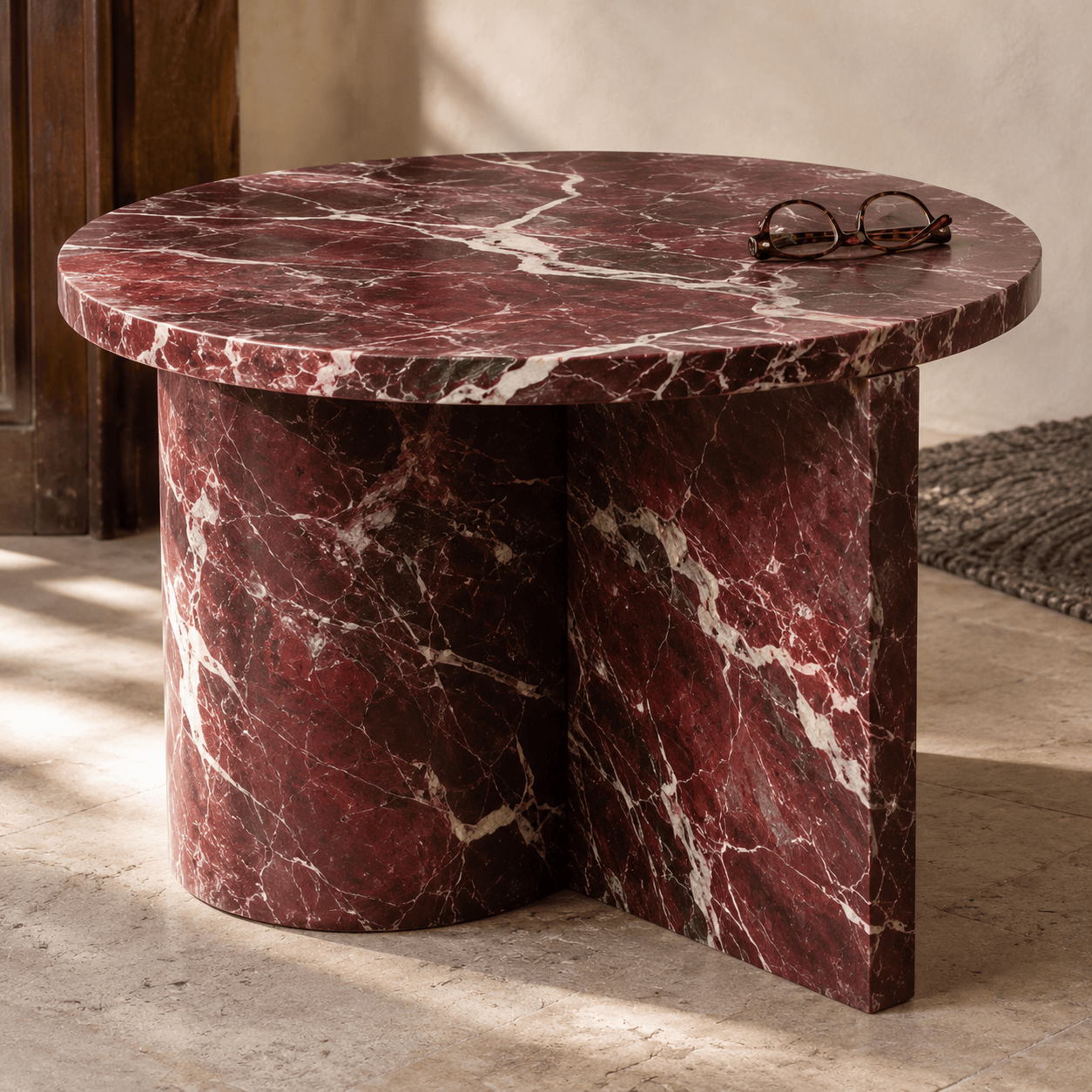
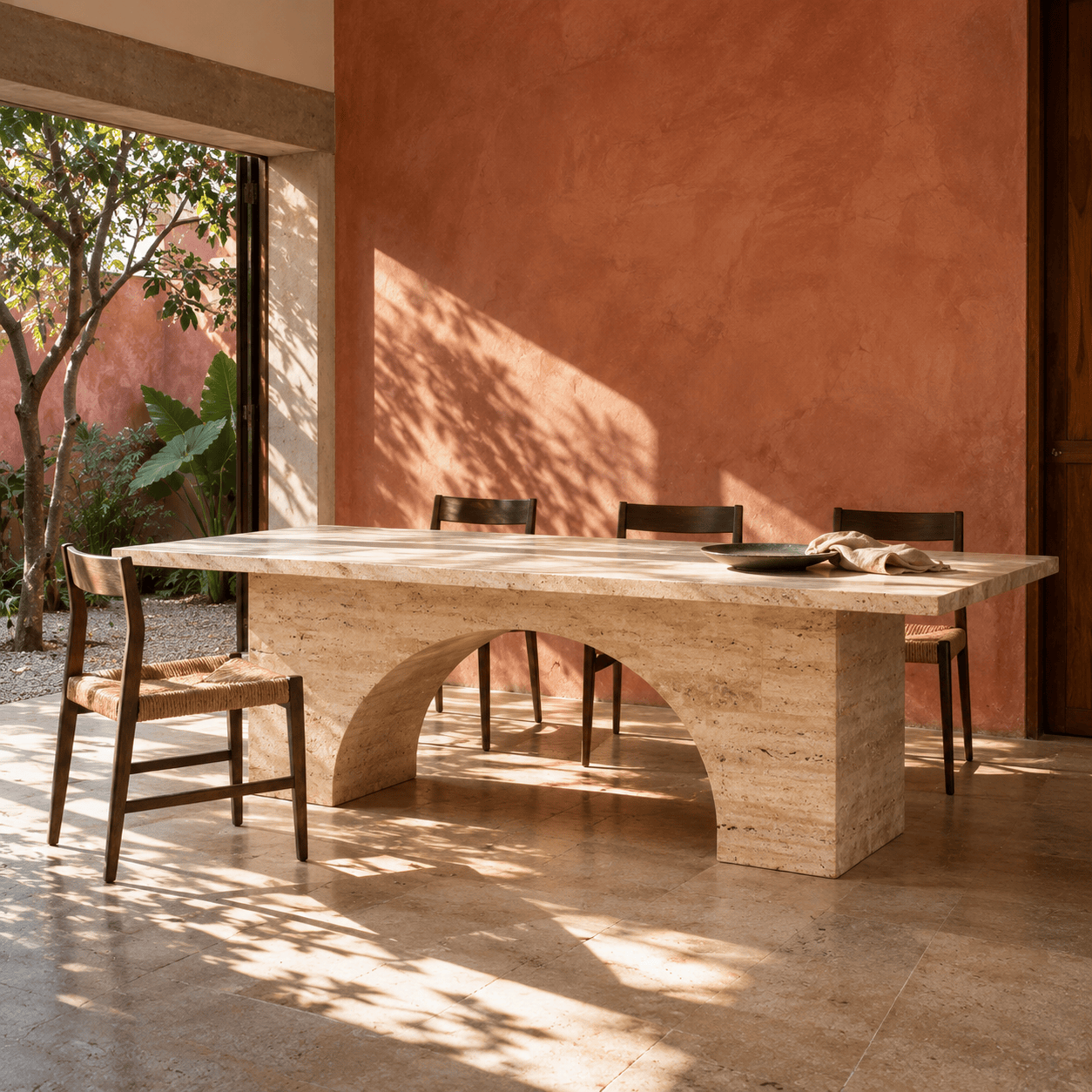
Stone presents a different set of pleasures and challenges. Its weight establishes an immediate sense of physical presence. The natural markings within marble, the small cavities of travertine and the quieter mineral character of limestone can provide much of the visual interest in an otherwise restrained object.
A substantial stone table can resemble a fragment of architecture that has found its way indoors.
Metal is capable of remarkable contradictions. A sheet can be formed into a surprisingly delicate structure, while a cast object may possess an almost geological solidity. Polished surfaces absorb the colours of their surroundings through reflection, changing their appearance with the passing hours.
Upholstery offers perhaps the most playful possibilities of all. Its softness allows designers to experiment with volume, exaggeration and the visual suggestion of movement.
A chair can resemble an opening flower, an abstract figure or an arrangement of seemingly inflated forms, provided its underlying construction has been intelligently resolved.
These possibilities also explain why simply introducing curves into a piece of furniture does not necessarily make it sculptural.
The quality lies in the relationship between the chosen material, the intended function and the intelligence of the form.
Without that relationship, even the most elaborate silhouette can become rather tedious.
Giving an object room to breathe
A remarkable piece of furniture changes the way we perceive the space around it.
Place a substantial stone table in a modest dining room and the areas beneath and between its supporting elements suddenly become important. Position an expressive timber chair against a plain plaster wall and its shadow becomes part of the composition.
These relationships are architectural.
The best settings for sculptural furniture are often quieter than one might expect. An old apartment with classical proportions, a modest modernist house or a simple room with beautiful natural light can provide an extraordinary setting for a single well-chosen object.
There is little need to repeat its shapes throughout the room.
Indeed, the current enthusiasm for coordinating curved sofas, irregular tables, arched mirrors and organically shaped accessories can produce interiors in which every object seems to be demanding attention in much the same way.
The result is visual agreement without much conversation.
An unexpected contrast is frequently more rewarding. A flowing contemporary chair against formal nineteenth-century plasterwork. A piece of reflective metal beside an old timber cabinet. An unconventional upholstered seat within a restrained modernist interior.
Furniture acquires character through these encounters.
Leave sufficient space around an interesting object and the eye is free to investigate its proportions. Allow daylight to travel across it and its form becomes more expressive.
Sometimes the most intelligent decorating decision is to add nothing at all.
The case for a little eccentricity
There is an unfortunate tendency to associate serious design with serious-looking objects.
Muted colours, disciplined proportions and expensive natural materials have become familiar shorthand for sophistication. Yet the history of furniture is full of designers who understood the creative possibilities of humour.
Panton’s work is a reminder of this. His experiments with saturated colour and unconventional forms possessed an exuberance that feels refreshingly distant from much of today’s carefully restrained interior styling.
A wonderfully odd chair can make an otherwise formal room feel more human.
It might initially appear incongruous. Over time, it becomes the object that visitors remember, the seat children instinctively gravitate towards or the piece of furniture its owner would be least willing to part with.
There is room within good design for such affection.
Homes assembled entirely according to a coherent aesthetic can be impressive, but they occasionally reveal surprisingly little about the people who live in them.
The eccentric object, the inherited cabinet or the chair acquired simply because its owner fell in love with it can introduce a different kind of richness.
A little inconsistency is often the beginning of character.
Beautiful, but can you sit on it?
The obvious criticism of sculptural furniture deserves proper consideration.
Some pieces are extraordinarily interesting to look at and rather less enjoyable to use. An impractically low seat, an unstable table or an awkward backrest can turn a promising design into a daily irritation.
Calling an object artistic should not excuse poor construction or careless consideration of the human body.
However, usefulness is not a single, universal quality.
A dining chair, a reading chair and a small seat in an entrance hall serve different purposes. Each makes different demands upon its designer.
A sculptural bench intended for brief moments of rest need not offer the comfort of a generously upholstered armchair. Its presence in the hallway might be valued as much for the pleasure it brings upon arriving home as for the few minutes spent sitting on it.
The question is whether the object performs the role we expect of it.
There is an intelligence in reconciling an expressive artistic ambition with the ordinary requirements of domestic life. It is considerably more difficult than making something unusual simply for the sake of being unusual.
The finest examples of sculptural furniture make that achievement appear effortless.
Living with an object, rather than looking at it
A sculpture in a gallery is usually encountered under carefully controlled conditions. The lighting has been considered, the viewing distance established and the surrounding environment arranged to support our appreciation of the work.
Furniture in a home enjoys no such protection.
It must contend with changing daylight, misplaced possessions, visiting friends, tired occupants and all the little interruptions of domestic life.
A beautiful table may find itself supporting a half-finished breakfast. An extraordinary timber chair may become somebody’s favourite place to sit after a long day.
Far from diminishing these objects, such circumstances give them a richness unavailable through the detached experience of a gallery.
We become familiar with their small details. We discover how their surfaces change with the light. We notice the development of patina and the gradual softening of materials through repeated contact.
Eventually, an object acquires associations that have little to do with the intentions of its original designer.
It becomes part of somebody else’s story.
This, to my mind, is the most persuasive argument for bringing sculptural furniture into the home. Artistic expression becomes something we encounter naturally, in the midst of ordinary life, rather than an experience reserved for special occasions.
The Houszed Perspective
The renewed interest in sculptural furniture invites us to question a surprisingly persistent assumption: that the things we use every day deserve less artistic consideration than the things we admire from a distance.
History offers little reason to maintain such a rigid distinction.
Across cultures, generations of makers have given meaningful expression to the objects of daily life. Contemporary designers continue that tradition through new materials, unfamiliar forms and inventive methods of construction.
We need not turn our homes into galleries to appreciate their achievements. Nor must we surround ourselves with important names or expensive objects.
A single thoughtfully made piece of furniture can change our perception of an entire room.
More importantly, it can change our perception of the ordinary.
And what a pleasure it is to live with something that never entirely loses its capacity to surprise us.
Editorial references & further reading
- The Metropolitan Museum of Art : Akan artistic traditions and prestige furniture.
- Herman Miller : Isamu Noguchi and the Noguchi Table.
- Museum of Arts and Design : Wendell Castle and the American art furniture movement.
- Smithsonian Archives of American Art : Oral history interview with Wendell Castle.
- Vitra : Verner Panton and the development of the Panton Chair.
- Design Miami : Contemporary collectible design.

BEHIND THE STORY
Ola Adeyemi
Ola Adeyemi explores the connections between architecture, design history, culture and contemporary living. His writing looks beyond appearances, questioning familiar conventions and examining the ideas, traditions and cultural influences that shape the spaces we inhabit.
Continue the Conversation
Exploring the ideas, movements and cultural influences that shape the way we live.
Explore More Trends & Ideas →
See your home differently.
Discover remarkable interiors, exceptional design and ideas worth bringing home.
Good taste deserves good company.
Complimentary subscription. Unsubscribe anytime.