The WOUD Arc Side Table: The Beauty of Keeping Things Simple
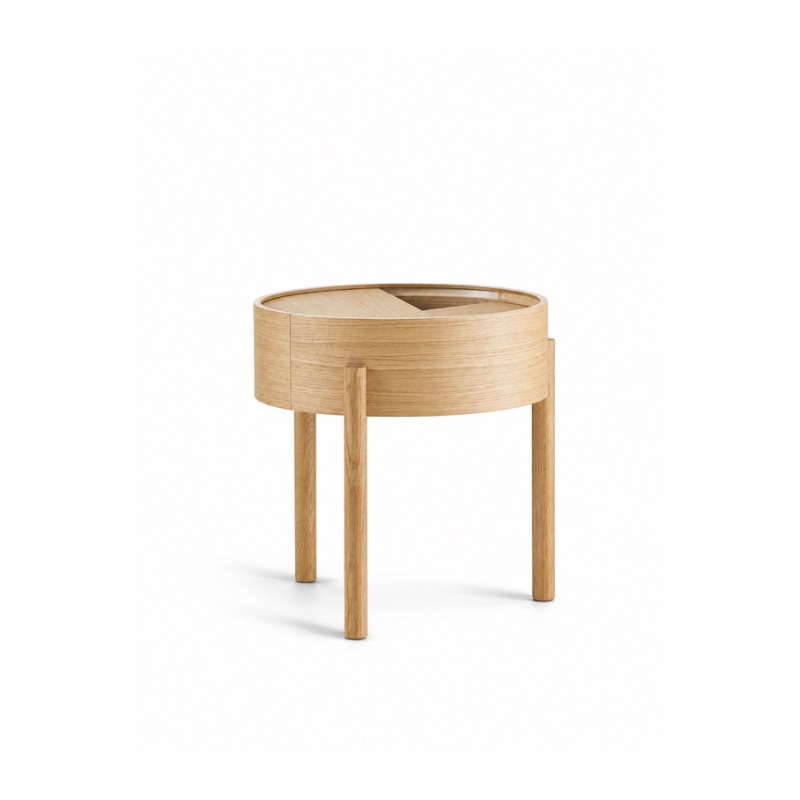

Born from the everyday experiences of two Danish designers, the Arc Side Table transforms a simple geometric idea into an elegant response to the realities of domestic life.
Beautiful objects. Ordinary moments.
A book left open beside the sofa, a pair of reading glasses, the remote control that never quite seems to have a permanent home.
These are the small, almost unremarkable details of domestic life that rarely make it into beautifully styled interior photographs.
Yet they are precisely the things that make a home feel inhabited.
The Arc Side Table, designed by Ditte Vad and Julie Begtrup for Danish furniture brand WOUD, takes these everyday inconveniences seriously. Rather than asking us to change our habits, it offers a more considered way of accommodating them.
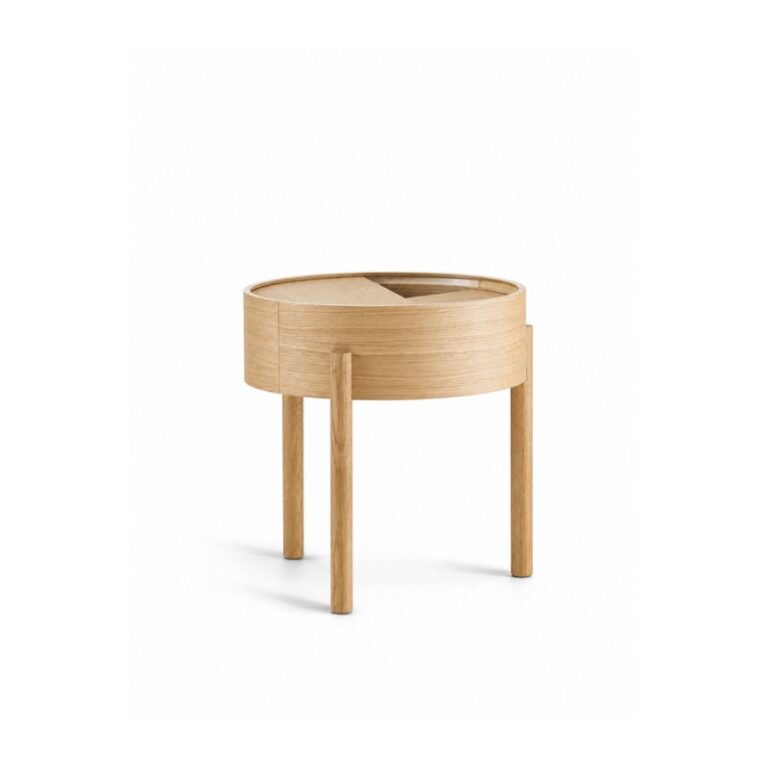
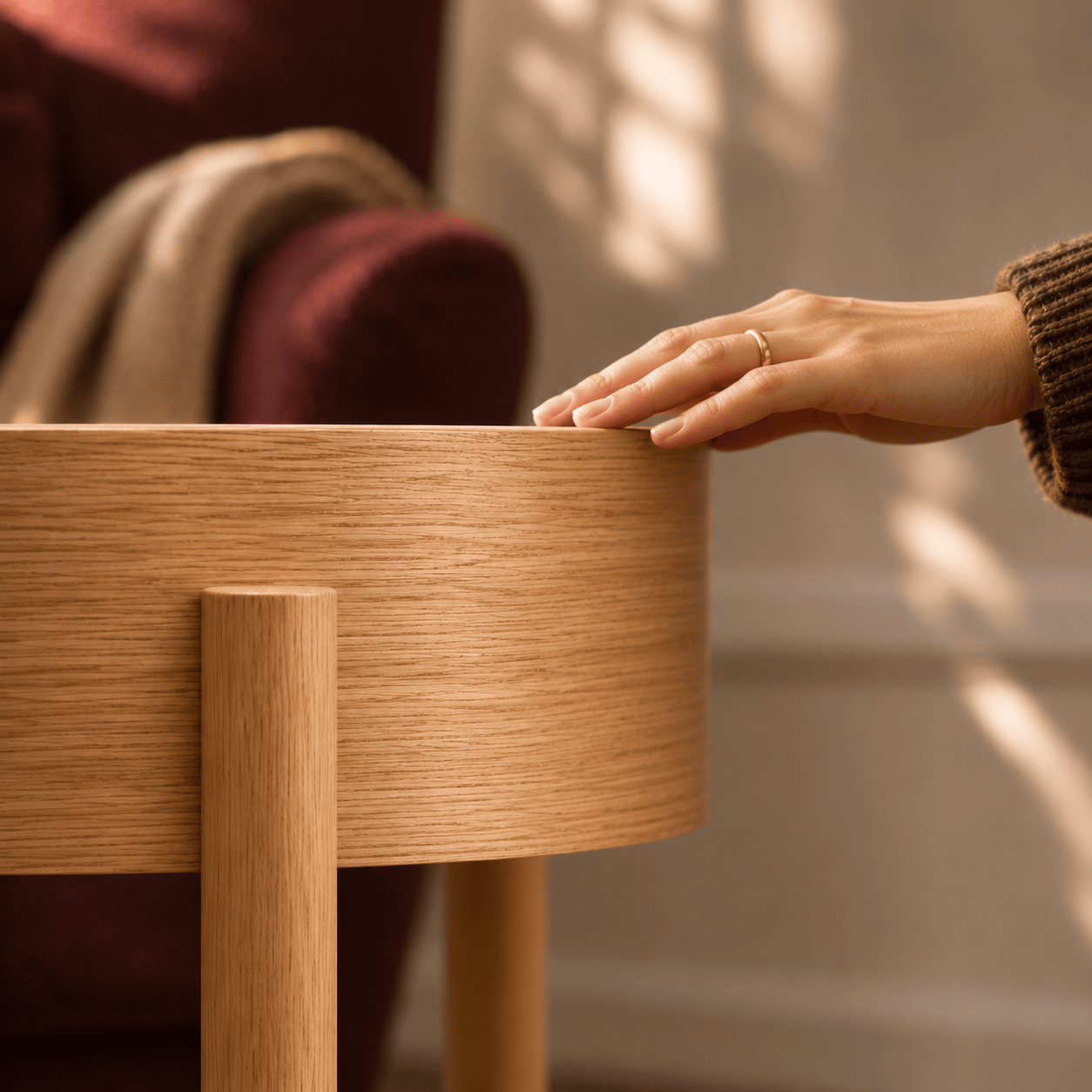
At first glance, Arc appears to be a beautifully restrained wooden table. Its circular body rests upon three slender legs, with little to interrupt the natural character of the timber.
Its most interesting feature, however, only becomes apparent when we touch it.
An idea born at home.
The story of Arc begins with two designers sharing a home.
Vad and Begtrup began collaborating during their studies, discovering a shared appreciation for materials, graphical forms and functional design. Whilst living together, they developed the idea for a table that could offer storage without sacrificing its visual simplicity.
Their drawings eventually became a handmade prototype.
There is something particularly appealing about furniture conceived through the experience of living with other people. Its function emerges from genuine observation rather than an abstract design exercise.
The designers understood that even the most carefully considered interior needs somewhere to accommodate the less attractive necessities of everyday life.
Arc gives those objects a home of their own.
The geometry of simplicity.
The name Arc comes from geometry, referring to a portion of a curve, such as the circumference of a circle. That mathematical idea is fundamental to the table’s appearance and function.
Its circular surface incorporates a rotating semicircular section. With a gentle movement of the finger, the user can reveal or conceal the storage compartment beneath.
The movement changes not only the function of the table but also its appearance. A complete circle becomes an asymmetrical composition of timber, shadow and negative space.
There are no visible handles to distract from the geometry, nor an elaborate sequence of movements required to access its contents. The interaction is intuitive, and that is a considerable part of its charm.
Furniture that invites us to touch it.
For Vad and Begtrup, interaction is an important aspect of their design philosophy. They are interested in the relationship between an object and the person using it, particularly the sensory experience that develops through physical contact.
The curved timber, the fine edge of the circular rim and the movement of the tabletop encourage us to experience the furniture through more than sight alone.
It is a small reminder that the pleasure of owning a thoughtfully designed object can lie in the seemingly insignificant gestures we repeat every day.
An honest expression of material.
In its oiled oak finish, Arc possesses a warmth that softens the precision of its geometric form.
The construction combines oak veneer with solid oak legs, whilst the interior compartment has a dark grey surface finished in smooth nanolaminate.
This contrast is particularly effective when the table is open. The pale timber meets a darker interior, giving depth to the otherwise restrained composition.
The horizontal grain of the curved wooden body is complemented by the vertical direction of the grain along its legs. It is a subtle detail, but one that rewards closer inspection.
The three-legged arrangement also gives the table a pleasing visual rhythm. Its substantial circular body appears unexpectedly light, leaving a generous amount of open space beneath.
Arc, in detail.
Beyond Scandinavian minimalism.
Scandinavian interiors are often associated with restraint, clean surfaces and a carefully edited collection of possessions.
Real life, of course, is rather less orderly.
What makes Arc interesting is that it reconciles these two worlds. Its appearance appeals to our appreciation of simplicity, whilst its function acknowledges our tendency to accumulate things.
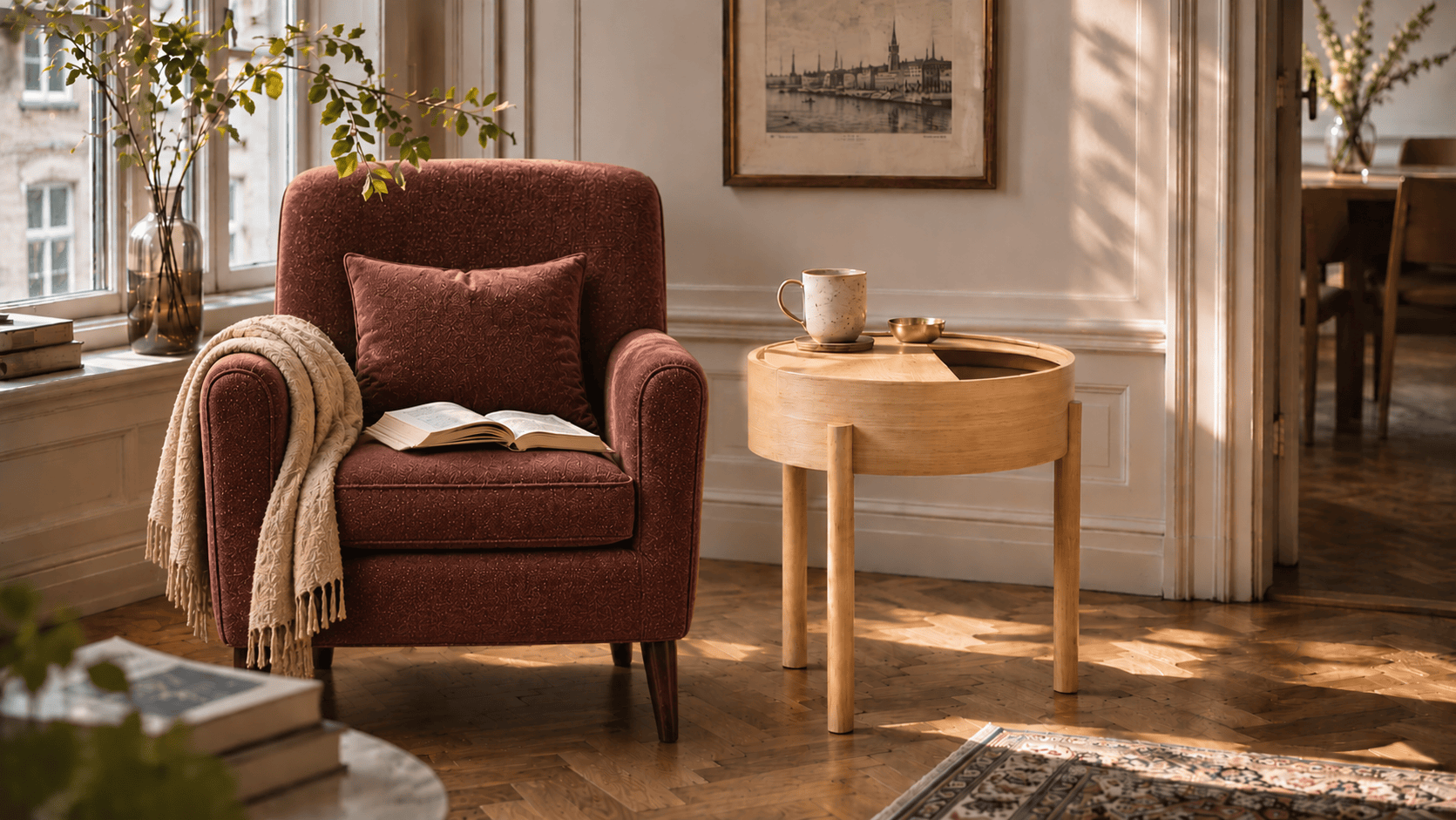
Placed beside a generous linen sofa, an upholstered reading chair or even an antique piece of furniture, its contemporary geometry offers a quiet counterpoint to more expressive surroundings.
It need not inhabit an exclusively Scandinavian interior. Against the rich tones of an Edwardian drawing room or the softened textures of an English country home, the simplicity of its form becomes perhaps even more apparent.
A beautiful home should make room for real life.
The Arc Side Table is not an attempt to reinvent furniture on a grand scale. Its achievement is considerably more modest, and perhaps all the more valuable for it.
It identifies a familiar domestic inconvenience and resolves it through an elegant combination of geometry, craftsmanship and human interaction.
Sometimes, good design is simply a matter of seeing an everyday problem a little differently.
Design history, designer information, material specifications and dimensions have been informed by WOUD’s official design literature and product information.
Ditte Vad & Julie Begtrup: Designer profile
WOUD: The Arc collection and design philosophy
WOUD: Arc Side Table, official product specifications

BEHIND THE STORY
Natalie Jones
Natalie Jones explores the creative side of interior design, with a particular interest in colour, texture and the details that give a room its personality. Her writing celebrates thoughtful decorating, individual style and the pleasure of creating a home that feels entirely your own.
More Objects Worth Discovering
Considered design. Distinctive objects. Pieces worth living with.
-
The WOUD Arc Side Table: The Beauty of Keeping Things Simple
-
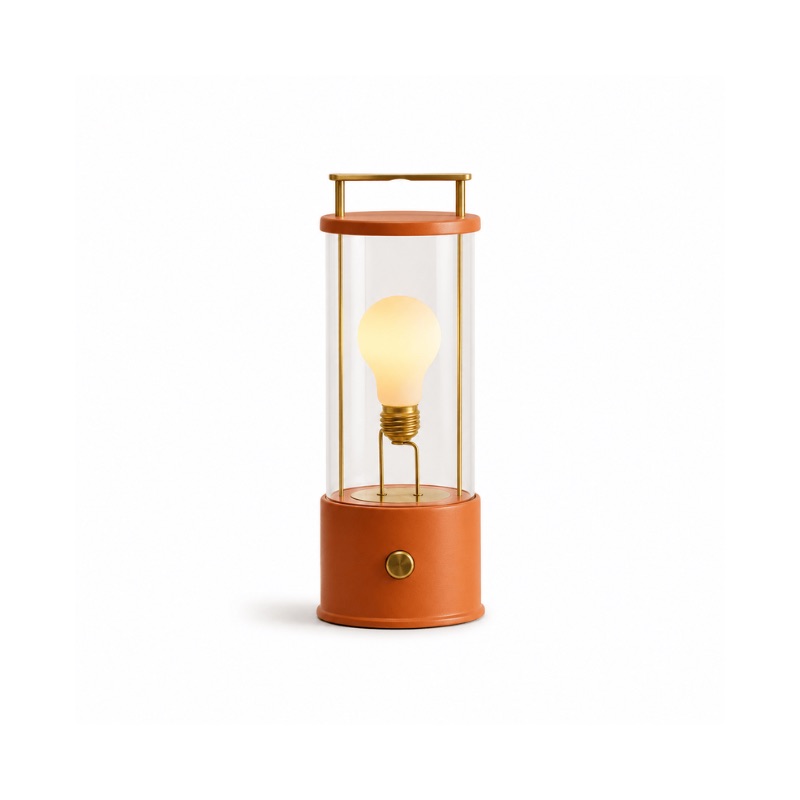
The Muse 2.0: A New Light on an Old British Tradition
-
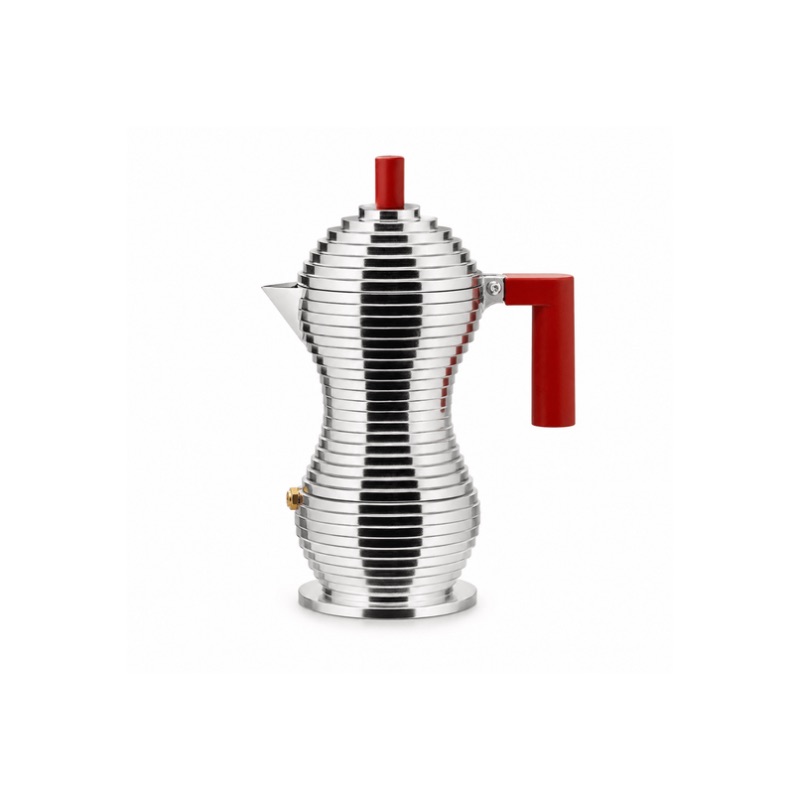
The Alessi Pulcina: The Art and Science of Making Coffee
-
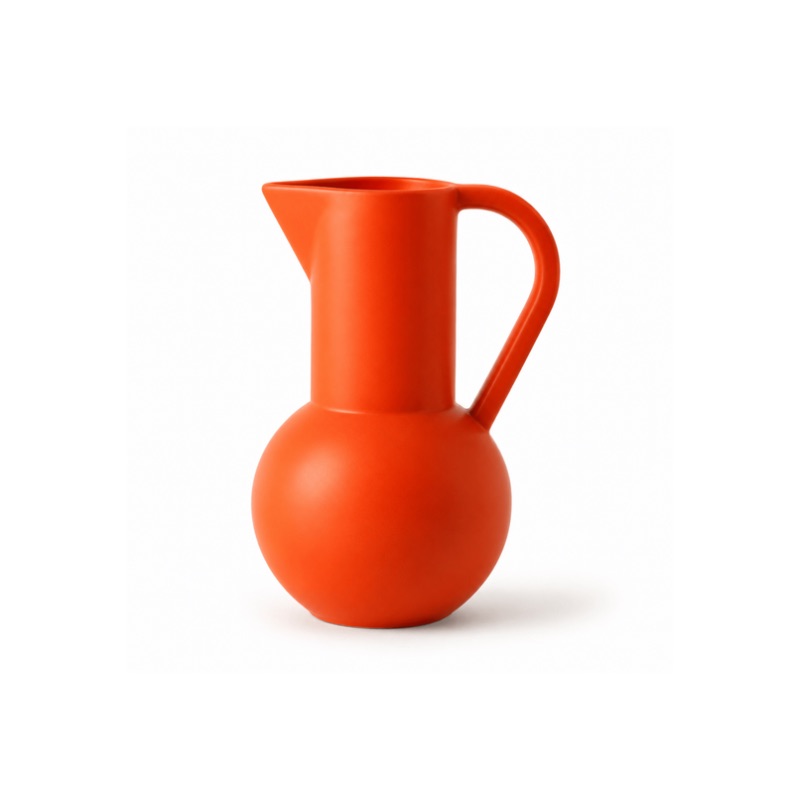
From Canvas to Ceramic: The Art Behind the Strøm Jug
-
The Pacha Lounge Chair: Pierre Paulin’s Beautiful Rebellion
-
The HAY Matin Table Lamp: A Little Colour, a Lot of Personality